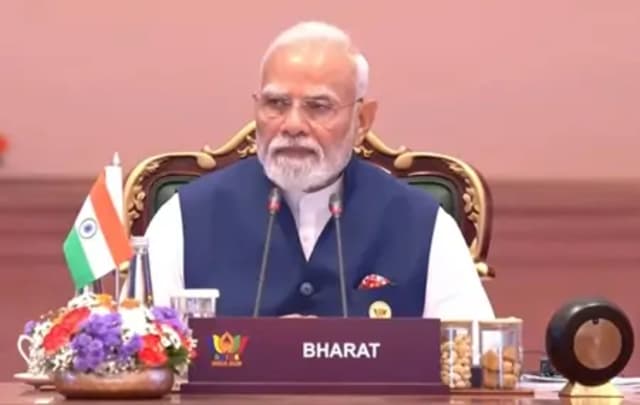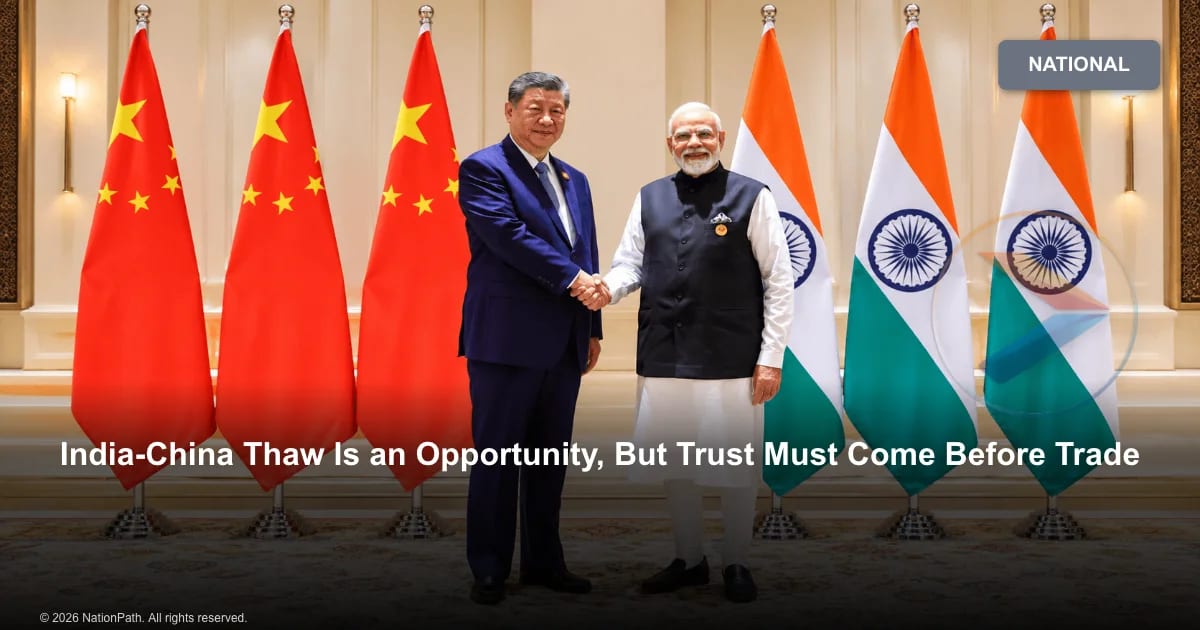

India-China relations appear to be entering a more pragmatic phase after years of severe strain. Prime Minister Narendra Modi and Chinese President Xi Jinping held talks on the sidelines of the BRICS Summit in New Delhi, with both sides signalling a willingness to look at their relationship from a strategic and long-term perspective.
That development deserves neither excessive optimism nor unnecessary pessimism.
Editorial Insight
Key Highlights
Important points readers should notice.
Issue/Event: India-China relations enter another phase of cautious engagement
Location: New Delhi, India
Authority/Organisation: Government of India and Government of China
Action Taken: Leaders reviewed bilateral ties and reaffirmed the importance of dialogue, border stability and long-term cooperation
Impact: Opens diplomatic space while leaving major border and economic challenges unresolved
For India, improved relations with China can create space for greater economic engagement, smoother people-to-people exchanges and more predictable regional diplomacy. For China too, a stable relationship with India serves wider economic and geopolitical interests at a time when the global order is becoming increasingly fragmented.
But diplomacy cannot erase the underlying challenges.
The border remains the most important test. India has consistently maintained that peace and tranquillity along the border are essential for the broader development of bilateral relations. Existing agreements and understandings must therefore remain the foundation of the relationship.
Editorial Analysis
Why This Matters
China is one of India's most important neighbours and economic partners. Any sustained improvement in relations can affect regional security, trade, supply chains and India's wider foreign-policy calculations.
This is where the current thaw must be judged.
A photograph of two leaders meeting, cordial statements or a successful summit can create diplomatic momentum. They cannot by themselves create strategic trust. Trust is built through consistent actions, military stability along the frontier and the ability of both governments to address differences without allowing them to become larger disputes.
The economic relationship presents another difficult question.
India and China remain major trading partners, but the relationship has long faced concerns over structural trade imbalance, market access and supply-chain dependence. Greater economic engagement can be beneficial, but it should not come at the cost of India's long-term resilience.
The right approach is therefore not complete disengagement and not unrestricted dependence.
India can engage China where cooperation serves Indian interests while simultaneously strengthening domestic manufacturing, critical supply chains, technology capabilities and alternative international partnerships.
The same principle applies to diplomacy.
India does not need to choose between engaging China and strengthening ties with other major powers. New Delhi's foreign policy strength lies precisely in its ability to maintain relationships with competing centres of power while protecting its own strategic autonomy.
The post-BRICS phase should therefore be viewed as a test of pragmatic diplomacy.
If border stability improves, economic concerns are addressed gradually and regular high-level communication continues, the present opening could develop into a more stable relationship.
But if diplomatic warmth is not followed by meaningful progress on the ground, expectations will quickly run ahead of reality.
India should welcome dialogue with China, but it should also remain clear about its core interests.
Peace on the border, balanced economic engagement and mutual respect should be the three foundations of the next phase of India-China relations.
The opportunity is real. The outcome, however, will depend on what happens after the summit.