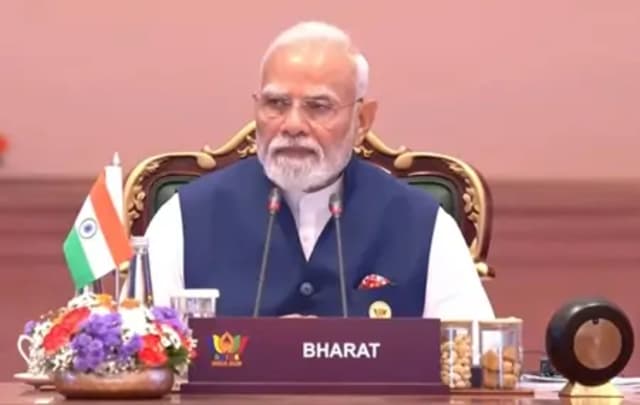
In a major push for railway infrastructure, the Cabinet Committee on Economic Affairs (CCEA), chaired by Prime Minister Narendra Modi, has approved a ₹1,264 crore project to expand the Ballari–Guntakal railway corridor.
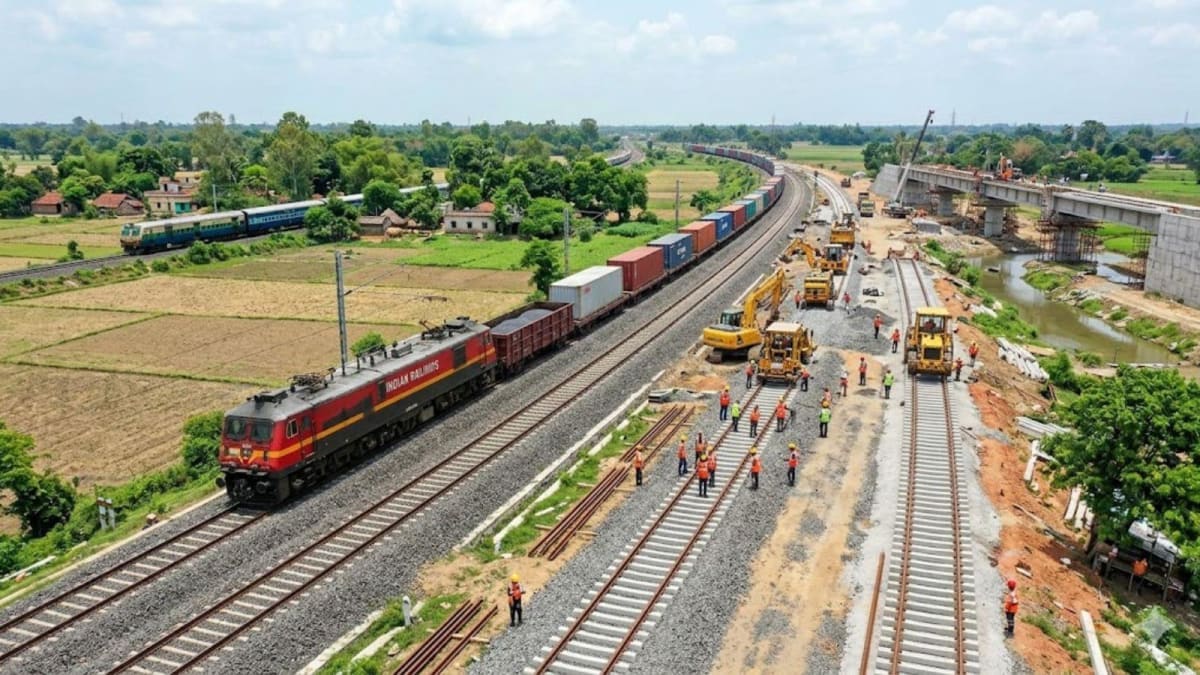
The project will add third and fourth railway lines on the busy route connecting Karnataka and Andhra Pradesh, easing congestion and increasing the capacity for both passenger and freight trains under the PM Gati Shakti National Master Plan.
Editorial Insight
Key Highlights
Important points readers should notice.
Cabinet approves ₹1,264 crore railway project.
Third and fourth rail lines to be added.
Covers 46-km Ballari–Guntakal corridor.
Part of PM Gati Shakti National Master Plan.
Expected to reduce congestion and improve freight movement.
Better connectivity between Karnataka and Andhra Pradesh.
The approved railway project involves the construction of third and fourth lines on the 46-kilometre Ballari–Guntakal section, one of South India's important freight and passenger rail corridors.
According to the government, the expansion is expected to remove bottlenecks on the existing route, allowing more trains to operate while improving punctuality and operational efficiency. The corridor is heavily used for transporting minerals, steel, cement, coal, fertilisers and agricultural products.
The project forms part of the PM Gati Shakti National Master Plan, which integrates infrastructure planning across railways, highways, ports, airports and logistics to reduce transportation costs and improve connectivity nationwide.
Editorial Analysis
Why This Matters
The Ballari–Guntakal corridor is an important transport link for industries in southern India. Increasing rail capacity is expected to support manufacturing, mining and agriculture by enabling faster movement of goods, lowering logistics costs and improving regional connectivity. The project also aligns with the government's broader infrastructure and multimodal transport strategy.
Officials said the expansion will strengthen connectivity between Karnataka and Andhra Pradesh while supporting industrial clusters, manufacturing centres and logistics hubs in the region. Faster freight movement is also expected to improve supply chains and reduce transit time for businesses.
Besides freight operations, passengers are also expected to benefit through increased train capacity, reduced congestion and more reliable services on one of the region's busy rail routes.
The government stated that the project is designed to support long-term economic development while promoting sustainable transport by shifting more freight to rail, helping lower logistics costs and reducing carbon emissions compared with road transport.
ParticularDetailsProject Cost₹1,264 croreCorridorBallari (Karnataka) – Guntakal (Andhra Pradesh)Railway Length46 kmWorkConstruction of 3rd & 4th railway linesSchemePM Gati Shakti National Master PlanObjectiveIncrease freight & passenger capacityExpected BenefitReduced congestion, faster logistics, improved connectivity
The PM Gati Shakti National Master Plan, launched in 2021, aims to create integrated multimodal infrastructure across India by improving coordination among different ministries.
Railway capacity expansion is a key component of the programme, helping reduce logistics costs, improve industrial competitiveness and strengthen connectivity between economic centres.
Official Statements / Verified Information
- The Union Cabinet approved the ₹1,264 crore Ballari–Guntakal railway expansion project.
- The project includes construction of third and fourth railway lines.
- It covers a 46-km section between Karnataka and Andhra Pradesh.
- The project is being implemented under the PM Gati Shakti National Master Plan.
- The expansion aims to improve passenger services, freight movement and logistics efficiency.
What Happens Next?
- Detailed project implementation and construction work will begin following administrative clearances.
- Indian Railways will execute the expansion in phases.
- Once completed, the corridor is expected to handle higher passenger and freight traffic with improved operational efficiency.